Friday, December 12, 2014

BOOK REVIEW – THE BEST SHORT STORIES OF FYODOR DOSTOEVSKY PART 1


BOOK REVIEW – THE BEST SHORT STORIES OF FYODOR DOSTOEVSKY
PART 1

In the introduction to his translation of ‘The Best Short Stories of Fyodor Dostoevsky’ David Magarshack observes that it is in Dostoevsky’s smaller works that we find the highest expression of his creative power and profundity of thought. The selection of stories in this book include –

White Nights
The Honest Thief
The Christmas Tree and a Wedding
The Peasant Marey
Notes from the Underground
A Gentle Creature
The Dream of A Ridiculous Man.

My reading of Dostoevsky so far had been limited to his three major novels –
Crime and Punishment, The Brothers Karamazov, The Idiot and the shorter novellas The Possessed and Notes from the Underground (included above in the short stories)

These stories are so distinct and still so interconnected that the full force of Dostoevsky’s thought processes so elaborated in his more famous longer novels are brought out here with such impact that I thought that to do justice to this collection of the best short stories it would be necessary to review each story individually and as such I thought I should do it over a series of posts on this blog.

WHITE NIGHTS – A sentimental love story – From the memoirs of a dreamer

And was it his destined part
Only one moment in his life
To be close to your heart …..    – Ivan Turgenev

White Nights is a story spread over four nights about a lonely man (the narrator) and his unrequited love for a young woman whom he befriends one night while she is waiting for the return of her lover to be reunited with him. This is a simple story and in fact was adapted as the underlying theme for the Hindi Film ‘Saawariya’ by Sanjay Leela Bhansali. Dostoevsky’s story however delves deep into the psyche of the lonely man – a man who had shut himself off from human relationships and seemed to be more at ease with the inanimate objects around him; a man who had withdrawn himself into a shelf of self-pity and deprecation. Like most of Dostoevsky’s novels the story is told in first person by a nameless narrator –

“When I woke up in the morning I felt strangely depressed, a feeling I could not shake for the better part of the day. All of a sudden it seemed to me as though I, the solitary one, had been forsaken by the whole world, and the whole world would have nothing to do with me.”

He feels more comfortable walking the streets of St. Petersburg at night for during the day though he was never in the habit of interacting with anyone he used to connect emotionally with the faces he encountered and felt uneasy when they were absent or he came across new faces. At night he felt alone and happy and was surrounded always by the things he knew, the houses as he walked down the streets. They seemed to talk to him. He says –

“The houses too are familiar to me. When I walk along the street, each of them seems to run before me, gazing at me out of all its windows and practically saying to me, “Good morning, sir! How are you? I’m very well, thank you. They are going to add another storey to me in May”; or, how do you do, sir? I’m going to be repaired tomorrow”. And so on. He says some of them are great favourites of his and good friends.

White Nights is to a large extent considered autobiographical of a young Dostoevsky’s personal impressions during his own nocturnal wanderings in Petersburg.  

As they exchange their stories the protagonist finds himself falling in love with the young woman Nastenka. A lonely man at last finds there is someone actually real who has evoked this feeling of being wanted, for all the while he has been inside his self-imposed cocoon of solitude. His feelings are very clear when he says – “I know you’ll hardly believe me, but I’ve never spoken to any woman, never! Never known one either! I only dream that someday I shall meet someone at last. Oh, if only you knew how many times I’ve fallen in love like that!”

While Nastenka does develop feelings for him she never does acknowledge that she loves him and at the end on the fourth night when the young man whom she had been in love, and for whom she was waiting, does appear she goes away with him after giving our protagonist a letter where she states she will always love him as a dear friend.

The narrator ends by saying “Good Lord, only a moment of bliss? Isn’t such a moment sufficient for the whole of a man’s life?”

But perhaps the most telling passage in the story and which brings forth the angst of existence and by which I can surmise that therein lies the foundation of the whole of Dostoevsky’s philosophy and a forerunner of Existentialism is when he tells Nastenska –

“And you ask yourself - where are your dreams? And you shake your head and murmur; how quickly time flies! And you ask yourself again – what have you done with your time, where have you buried the best years of your life? Have you lived your life or not? Look, you say to yourself, look how everything in the world is growing cold. Some more year will pass, and they will be followed by cheerless solitude, and then will come tottering old age, with its crutch, and after it despair desperation. Your fantastic world will fade away, your dreams will wilt and die, scattering like yellow leaves from the trees. Oh, Nastenka, what can be more heartbreaking than to be left alone, all alone, and have nothing, absolutely nothing, because all you’ve lost was nothing, nothing but a silly round zero, nothing but an empty dream!”


(Book Review – to be continued)

Saturday, November 29, 2014

THE BOOK SELLER


THE BOOK SELLER

I paused before I rang again and waited patiently outside the apartment. It took a good two minutes before the door slowly opened; obviously the person behind was being cautious not wanting to be surprised by an unwelcome guest. Of course the danger of any intruder barging in was out of the question as she stood safe behind a grilled door, an additional reinforcement to keep away pests of a different kind. The look she gave me made me feel that I did belong to the second variety. The opened door did allow the aroma of ‘Sambhar rice’ reach my nostrils and for a moment I forgot the purpose for which I had come; the blistering sun outside, my aching limbs and the rumblings in my stomach had already made me groggy.

The lady of the house, she had to be that for she stared at me with such authority and with a trace of contempt while wiping her hands on a towel slung over her shoulder.

“Yes, who are you and what do you want?” She asked.

“Madam, if you can spare me two minutes of your time I will be grateful” I replied.

“Well man you have already interrupted me in the middle of my cooking. Are you a salesman? If it is Maggie noodles since you want just two minutes of my time, I am not interested. No one in this house likes them anyway.”

“Madam, I am sorry you misunderstood me. I am not a salesman and I do not sell noodles. I am here to talk about a book” I said trying to sound important,

“Oh books! Please I am not interested in any of your encyclopaedias or children books. You see our children have grown up and moved away and only I and my husband live here. We have no need for books”.

“I think this book would interest you and your husband, just have a look at it” I persisted thrusting a copy of my book through the grilled door.  

She looked at the cover without reaching for the book and for a moment looked surprised. “That’s you on the cover. You wrote the book?”

“Yes Madam, I am the author. The book talks about the life of an ordinary man, his dreams, beliefs, aspirations and the transformations that take place in his life during the process of aging. I think your husband will definitely like the book.”

“So you are here to sell me your book, isn’t that your main intention?” she asked.

“In a way yes” I said sheepishly.

“So you are a Salesman after all, you sell books” she said with a smile.

“Yes Madam, by that definition I am a Bookseller. Why don’t you ask your husband to browse through it? I shall leave a copy with you and come back tomorrow. You can buy if you like the book.”

She took the book in her hand and flipped through the pages and in the end said “I am just an ordinary man? What a funny name for a book. I don’t think that we need this book. Ordinary eh! My husband is already that – Ordinary.”

With that she handed back the book to me through the grilled door.

When I got my book published I never thought that I would at last have to resort to climbing stairs, knocking on doors to be met with cold stares, scour the streets in search of gullible victims, learn to take ‘no’ for an answer and ultimately come back with my inventory more or less intact. May be I misunderstood my friend when he said that I needed to raise the sales pitch, I started climbing stairs.

Ever since I started blogging I found that I have turned into some sort of Nostradamus while trying to understand the travails of aspiring authors. In the process all that I had written about the number of likes far exceeding the number of books has come to pass. The initial euphoria accompanying the announcement of the launch of my debut novel has at last waned and all the congratulations and best wishes have now been confined to the recesses my Facebook store.

But it has been an awakening of sorts. The author cannot expect that everyone he knows be it a friend or a relation would ultimately purchase the book, though every one of them in their heart of hearts is genuinely happy for you. The author is in a hurry and the reader is not for he has his own affairs to attend to. I do not exclude myself for though an author, I am also a reader.

But one thing is sure that the writer who is in the process of testing the waters is an Author, Publisher and above all a Bookseller and believe me that the last role is proving to be most difficult.


Friday, November 28, 2014

B00K REVIEW – ‘Do Not Take This World Seriously’ By Kishore R. Kulkarni


B00K REVIEW – ‘Do Not Take This World Seriously’
By Kishore R. Kulkarni

Spirituality is serious stuff and that is what this whole book is about. In the author’s own words he says “I have presented my understanding of spirituality from an ordinary seeker’s perspective. It is not a scholarly treatise. It simply presents the “musings” of a spiritual seeker based on the classical Indian spiritual thinking as epitomised in Shrimad Bhagawad Geeta.” Yes, it is the author’s own understanding and interpretation of The Bhagavad Gita and other scriptures that is spread over twenty chapters, seeking to convey to the reader the essence of Hindu Philosophy through a process of dialogue and introspection. In the prologue itself the author sets the pattern when he says “my idea is not to convince any reader by means of this book to take up spirituality. It is simply a sharing that may have a role to play in some people’s lives, if the divine scheme has it that way.”

Some time back I read Richard Dawkins book ‘The God delusion’ where the entire book is based on the author’s contention that a supernatural creator almost certainly does not exist and that belief in a personal god qualifies as a delusion, which he defines as a persistent false belief held in the face of strong contradictory evidence. Kulkarni asserts that “I strongly believe that there is a divine plan behind this creation, and certainly behind someone getting on to the spiritual path.”

Born into a conservative Brahmin family, it was but natural that Kulkarni imbibed the theistic values of his surroundings grew up as God fearing individual up to his early youth. There were two transformation moments in his life – one in the author’s own words “I may concede that by virtue of my education and profession, I must have changed significantly from a god fearing child and teenager to a “rational intellectual adult”, such as they come in the modern times! So, I never thought I would ever become a serious spiritual seeker” and the second was when he met his spiritual guru when on a trip to Singapore, again in his own words “Those couple of hours somehow left a deep impression on me. Not that she revealed any great fundamental truths or put forth any “convincing” arguments in favour of spiritual pursuit. But something happened to me all the same through that session. Since then, I engaged myself in a little bit of meditation and gradually got more and more interested in spiritual pursuit.” Though he says that he is an ordinary seeker, it is evident that he has engaged himself in a serious study of the Hindu scriptures.

The interesting part however is that the book will indeed appeal to the ordinary seeker as it is for most part in the form of a conversation, a question and answer session between the author and the reader with the author’s own narration and interpretations thrown in to amplify the concept with examples from our own lives thrown in. The twenty chapters cover the entire gamut of questions from the creation of the world, the Creator to the question of ‘Who am I’, of desires and detachment, freewill, destiny and action – the meaning of Vairaagya and the outcome of actions or Karma Yoga, love, forgiveness, faith and non-violence. In the end there is chapter on the significance of the scriptures.

The glossary of Sanskrit terms at the end of the book is a must and the author has compiled it an easy to refer tabular form. Without this the book would have proved unintelligible to the ordinary reader and the others who would see it as an introduction to Hindu spiritual thought.

This is a vast subject and the author Kishore Kulkarni has acknowledged – “The book is organised into two volumes. Language has very serious limitations and when it comes to spiritual terms, two persons may understand them quite differently. That is the reason I have presented up front in Volume 1, my understanding of the various important spiritual terms and concepts, so that the reader can appreciate my philosophy better. Volume 2 presents my ideas about the real spiritual goal and the practice for achieving that goal – what exactly a spiritual seeker should be doing – both in the inner mental realm as also in the external world of action.”

I however felt that the title could have been different for spirituality is a serious matter. All in all a commendable effort for as the author says “After all, it is my strong belief that spirituality is all about transformation of mind through constant contemplation on the matters beyond the physical creation.”


Friday, November 14, 2014

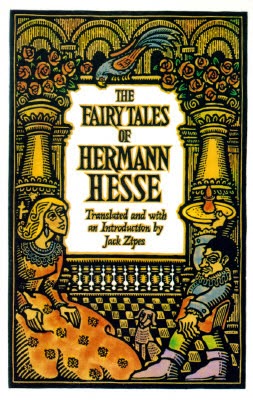
THE FAIRY TALES OF HERMANN HESSE – BOOK REVIEW


THE FAIRY TALES OF HERMANN HESSE – BOOK REVIEW

At the very outset let me confess that I have always been a diehard admirer of the works of Hermann Hesse. Whether it is Siddhartha, Steppenwolf, Narziss and Goldmund down to his magnum opus ‘The Glass Bead Game’ they have left their imprint and influence on me to this very day. Some time ago I did post here ‘Duality 2 – A Tribute to Hermann Hesse’ to explore the recurring theme of duality that characterises the works of Hermann Hesse, one of the greatest German novelists of the twentieth century. Throughout all of his works one can sense his attempts at bringing about a balance between the two opposing forces of asceticism and the world, so that we reach a better understanding of the world and on towards self-realization.

All that was three decades ago and I thought that I had exhausted all the books written by him at least the significant ones (my ignorance). So it was a revelation and a feeling of elation when I while browsing the books on Goodreads chanced upon the ‘The Fairy Tales of Hermann Hesse’. Thirty years ago I had last been transported to the magical world of Magister Ludi and ‘The Glass Bead Game’ and ever since I have been searching for that world of Hesse. It was a difficult book but once you plunged into that world there was no turning back.

And so there I was during the last ten days letting in every word of Hesse in this book – his fairy tales, sink into my psyche once again. I knew what to expect – enter once again into his fabulous world of dreams and visions, philosophy and passion. I will quote a portion of the blurb on the back cover of the book which states –

“Full of visionaries and seekers, princesses and wandering poets, his fairy tales speak to the place in our psyche that inspires us with deep spiritual longing; that compels us to leave home and inevitably return; and that harbours the greatest joys and most devastating wounds of our heart.”

Jack Zipes’s wonderful English translation does not ever make you feel that you have missed out on any of Hesse’s original thought process in the original German. In his exhaustive and wonderful Introduction Zipes has this to say –

“To know Hermann Hesse’s fairy tales is to know the trauma, doubts, and dreams of the artist as a young man in Germany at the beginning of a tumultuous century. Like many other European writers, Hesse perceived the events around him – the rapid advance of technology, the rise of materialism, the world wars, the revolutions, and the economic inflations and depressions – as indicative of the decline of Western Civilization. It was through art, especially the fairy tale that Hesse sought to contend with what he perceived to be the sinister threat of science and commercialism.”

Not to be misled by the term ‘Fairy Tale’ which to our understanding has always been signified by ‘And they lived happily ever after’, Hesse’s fairy tales are either tragic or open ended leaving it to us to contemplate and change the conditions that had brought about such a closure.  Hesse uses the fairy tale narrative effectively of blending the world of imagination and symbolism with reality and allowing the reader to go beyond and grasp the essence of living. In the process he weaves a magical world and sometimes takes us back into the world of Harry Haller in the Magic Theatre a place where he experiences the fantasies that exist in his mind in the book ‘Steppenwolf’ or the world of Emil Sinclair in ‘Demian’ whose entire existence can be summarized as a struggle between two worlds: the show world of illusion (related to the Hindu concept of maya) and the real world, the world of spiritual truth accompanied and prompted by his mysterious classmate 'Max Demian', he detaches from and revolts against the superficial ideals of the world of appearances and eventually awakens into a realization of self. In the story ‘If the War Continues’, the protagonist is Emil Sinclair, a writer. One can recall that Hesse wrote ‘Demian’ under the pseudonym of Emil Sinclair.

The book is more like a compendium of all the themes that Hesse covers in his novels and reflections of his own life beliefs and convictions. There is something mystical, magical about the way he weaves these short stories. One can categorize the stories into distinct groups based on the dilemmas encountered by the individual, society and the world at large.

While in the stories ‘The Dwarf’, ‘Shadow Play’, and “Dr.Knoegle’s End’ the sensitive and harmless protagonists are crushed by narrow minded people, in ‘The Poet’, ‘Flute Dream’, ‘Forest Dweller’ and ‘The Painter’ Hesse portrays their realization through a search for attainment of their full potential. Hesse’s pacifism and the search for an utopian order in this world comes out strongly in- ‘A Dream about the Gods’, ‘Strange News from Another Planet’, ‘If the War Continues’, ‘The European’ and ‘The Empire’.
The translator in his Introduction highlights Hesse’s that “Nationalism is the most dangerous force because it can inspire people to obsessively seek power and become caught up in war for war’s sake”.

Each and every one of the twenty two stories in this book have their own appeal as Hesse takes us on a journey through his world of magical, sometimes mystical world of romantic symbolism and idealism.

Jack Zipes the translator sums up his introduction – “Hesse’s best tales are filled with a keen sense of longing for a home that is utopian counterpart to the horrors we continue to witness in our present day and age”.

Now I feel happy that I have completed all of Hesse’s work, or have I? I hope there are some more undiscovered ones,


Thursday, October 30, 2014

‘I AM JUST AN ORDINARY MAN’ – FIRST REVIEWS RECEIVED


‘I AM JUST AN ORDINARY MAN’ – FIRST REVIEWS RECEIVED

An author is happy when he finds that he has been able to connect with the reader and that is his first reward. I am overwhelmed by the first reviews that have come in, posted on Amazon, Goodreads and Notion Press. I know that I have shared these with my friends as and when each review came in but I feel the necessity to share these also with the readers of my blog who lie even outside my social media circles. But I know that I have a long way to go before I reach out to a larger audience. It is not vanity I assure you, but is a quest to gain acceptability and hence an authenticity to my writings. This should spur me on to improve myself for I am also aware that this is the start of a journey. I should thank all the reviewers for having taken the time to really go in to the soul of the book and put down in their own words what they have seen and felt. Like I say in the ‘Introduction’ – “Life is never white or black, it has always been a combination” and so do I expect the way people will look at my book.


Sridhar Raju's review 
Oct 19, 14
5 of 5 stars
Read in October, 2014

The ’Ordinary Man’ is ordinary only to the extent that he is not a public figure or famous. He is ordinary to the extent that all of us are ordinary and lead mundane lives. Yet with his extraordinary thoughts he captivates us. He is involved in a conversation with someone, whom he calls his alter ego, on the events that shaped his life-his father’s demise when he (the protagonist) was just 13, his days at a premier engineering institution, his dabbling with painting, drama and music., his traditional marriage and the story of his love for his loyal wife and lovely daughters, his mixed feelings about his moderately successful career and then his thoughts on what could have been. The author jumps from the past to the present and back to the past, replicating the action of a human brain which works not chronologically but by association. The story is interesting and well told. And you realise that this “Ordinary Man’ is by no means ordinary. Shakespeare, Camus, Sartre and Gide among many others, quantum physics and Schrodinger’s cat all influence the protagonist and one sees the existential crisis or angst( as the author terms it) in his musings.

I must confess that I started the book expecting a cross between a blog and a chronology of the author’s life with a dash of humour thrown in. While I found all three I also found a profound exposition on human nature, on morality, on passion and compassion packaged around lovable human beings.

There were many passages which brought a lump to my throat and there were others which brought smiles of happiness. It is rare that a book can touch both the head and the heart. ‘I am Just an Ordinary Man’ does just that.

Keep them coming, Mr.Subbu.


Gangaikondan S rated it 5 of 5 stars
Review for G S Subbu’s “I am an Ordinary Man” –2014
By Kris Krishna

Which male individual born and growing up during the mid 20th century in the rigid middle class in post independent India has not felt the angst of who they really were and what they were destined to be?

G.S.Subbu in this semi autobiographical and fictional novelette has given voice to those “yearning to breathe free”. He connects with a whole generation of Indians that felt “left out” in the “freedom,” that India promised in 1947.

His approach to story telling adopts the protagonist versus alter ego style and in the process he reinvents himself several times to describe the many what ifs that could have moved him from being an “ordinary man” to someone more “successful”.

The depth of his erudition is on full display as he quotes philosophers, poets and artistes to buttress his argument that “waiting for miracles” does not guarantee escape from being an “ordinary man”.

In the end his fictionalized last years..”death” as it approaches him is no scarier than the comfort of knowing that his “grandchildren will recognize him” and relationships and his legacy will endure.

A wonderfully conceived book and I recommend it if you want an introduction to the age old question, “Who am I?”


Kishor Kulkarni's review 
Oct 25, 14
5 of 5 stars
Read in October, 2014

“I am just an ordinary man” is an honest and contemplative exposition of the author’s mind in a well articulated style. Although the author’s life as brought out in this book is like that of an ordinary middle class person from a conservative family background, the book is not really a simple autobiographical account of the author. It is much more than that. It presents an extra-ordinary philosophical view of an ordinary man’s life. It starkly brings out the fundamental fact of life that one, especially during the sunset years of one’s life, has to more likely tread a lonely path. This is brought out very effectively, for example, in the fact of the author and his wife leaving home together in the evening, but the author turning right towards the beach for a walk and his wife turning left towards the neighbourhood temple!

The author claims himself to be an ordinary man where the ordinariness is in the sense that most of us seem to be programmed to go through our own life willy nilly trying to fit our situation as best as possible. Most of us are ordinary because most of the times, we keep seeing only a very limited and near horizon, possibly because we do not know or are not designed to know the “big purpose” behind not just our individual life but behind this creation as a whole.

The author says he is an ordinary man and that is what he brings out through most of the book by narrating his life story. However, the chapter titled “Sublimation” reveals how an ordinary man’s journey of life can culminate in the realisation of the fact that there is no universally applicable purpose of life, nor a particularly ideal goal to be achieved. Life is just a journey along a circular loop and that realisation is the real aim of the last of the four phases of life, namely sanyasashram – a detachment from life even without leaving home and family.

All in all, most of us being ordinary should be able to identify with the protagonist of the book and should get spurred on to contemplate on their own individual life philosophically.


Nk's review 
Oct 25, 14
5 of 5 stars
Read on October 24, 2014

Reading a book in one session, is not something I am not used to in the recent days. But reading Subbu's book "I am just AN ORDINARY MAN" in one shot has been some kind of record for me.

Subbu depicts like Samuel Beckett, the life of an ordinary man, but the capitals in the Title tell us something - that is no ordinary man. Life achievements are counted in the modern times through the number of wounds one carries, but unlike the ancient days to be a Bhishma, one does not need a bed of arrows any more. Subbu captures it all - ordinary is no longer ordinary; life's journey is a rock that stands still even as the river keeps on rushing by.

The story surprises you, although it is so written that there cannot be any surprise at all! I also love 'The Beatles' and they said it right - "Because the world is round."

Please read this book, buy a few a copies, gift them, because - Because the world is round.


By Induchoodan Menon on 29 October 2014
Format: Paperback Verified Purchase
5 out of 5 stars

The fictional autobiography “I am just an ordinary man” by GS.Subbu is not an ordinary book by any standard. The author does not follow the oft-repeated style of telling the story in a chronological order. Instead he goes back and forth in time mainly focussing on the experiences and their impact on his life. He has an easy felicity with the language and is able to convey some of the deeply moving experiences of his life with rare brevity of expression. One that stands out in my mind is the scene where the he narrates the loss of his father when he is still a small boy and how his mother holds him closely watching the funeral pyre of his father as if to convey that she is there to take care of him. He analyses his own life in an impartial manner through the medium of a friend who is nothing but his own alter-ego. This is the life story of a person who through the fever and fret of life never ceases the search for the deep inner silence.
The failures in life disappoint him only briefly as he bounces back to his normal self by examining and analysing the events in their proper perspective. The success or failure in the external world does not matter when it comes to achieving the deep inner silence. In the chapter titled “Sublimation” the author foresees himself in the final years of his life. He seems to understand that the search for meaning of life is ultimately pointless as it is left to oneself to give a meaning to it. His philosophical musings are highly readable and his exposition of dreams he has has a Jungian quality.

The narrative of the story is very gripping and is spruced up with some humorous touches here and there. In short this is a book which comes under “must read” category.


Friday, October 24, 2014

‘I AM JUST AN ORDINARY MAN’ – REALITY CHECK


‘I AM JUST AN ORDINARY MAN’ – REALITY CHECK

Now that the euphoria surrounding the publishing of my book ‘I AM JUST AN ORDINARY MAN’ has subsided and I have been basking under the congratulatory messages and the good wishes of my friends that had poured in, I realise that this is the beginning of a journey to establish oneself as a writer of content whose writings are genuine enough to linger in the mind of the reader long after it has been read. The reality check has just started.

For the first time in my life as a blogger I received nearly 350 page views of my post announcing the publishing of my first book within the first two days of posting (this is now well over 400). Over the last three years I have developed a dedicated readership and it has given me immense satisfaction that I have to a certain extent established myself as a writer of content. In the process I have built up expectations that to a major percentage of them this book may evoke interest and translate ultimately in to sales, not because I expect to make money out of this venture, it is more to gain acceptability and establish my authenticity.

You can say the reality check started when I received a letter of intent from one of the well-known publishers a portion of which I am reproducing here –

“We receive about 1,500-2,000-odd scripts each month, and understandably, select only a few books for complete review and further for publication. The manuscripts ‘under consideration’, will get a publishing break, as and when the company allocates funds. We have around 5,000 books in the pipeline at present, and we release just about 200 each year. I am putting forth all details as transparently as possible to avoid any further expectation-fulfillment mismatch.  Due to a continually widening database of selected scripts and limited resources; a few worthy pieces of work do suffer. To benefit authors and not overstretch the company’s resources, we are offering you a project partnership proposal along with traditional publishing.”

Subsequently I did receive a mail after submission of the full manuscript stating “Thanks for the mail, we have evaluated your work in full and are glad that we could explore the possibilities of working together on your book.”
Naturally I was elated, but it took me only a few months to realize that it could take months or even years before my dream could come true (a possibility).

The reality is stark for a new writer, as is evident from what I have reproduced above. There are thousands of writers out there because writing has become easy with the advent of the digitised world, but publishing has become a major hurdle for the new writer and he ultimately finds that the only way to make his dream come true is through self-publishing. And that is where the self-publishing houses with their choice of packages and services come in to suit the pockets of the author concerned. From my own experience I should accept that they did do a decent job of printing a quality book and putting it on the various major online stores. But that’s all. How many writers must be languishing out there for want of resources to publish their work!

The next reality check – how successful have I been in selling my book because that is my lookout now. The new self-published author has no option but to rely on the vast (?) circle of friends he has developed over the years on the social media and otherwise to give the necessary initial push to make him more visible to the vast readership out there. Even if 25% of your friends on the social media respond it could be a satisfactory performance I would say. Well that is the reality check again.

But the entire process of writing, publishing and selling a book has been a great experience and an eye opener. I have read a lot and learnt a lot and I have finished my book and that has been my reward.

I have been reaching out to my friends through Facebook, Google+ and just started with Twitter(I am still learning how to interact on this). But I know that a large number of the readers of my blog postings who only appear as page views are also there from various places in the world and who I am sure have read my previous post and this is my way of reaching out to them.

The book ‘I AM JUST AN ORDINARY MAN’ is available both as paperback and Kindle Ebook on amazon.com and amazon.in apart from the publisher Notion press for the present. The Links are given here –


Tuesday, October 7, 2014

MY DEBUT NOVEL – I AM JUST AN ORDINARY MAN (Fictional Autobiography)


MY DEBUT NOVEL – I AM JUST AN ORDINARY MAN
                                        (Fictional Autobiography)


I am just an ordinary man,
I do just what I can,
So let me be,
As you can see,
I am one of those who also ran.

You cannot say I do not care,
Of love and dreams, I’ve had my share,
Of pain and pleasure,
In no small measure,
Though now I stand alone and stare.

“Sir, you asked me who I am. What shall I say? I have been asking myself this question for quite some time and reached nowhere. After all I am no saint to throw away everything that I have and go in search of an answer. If I had, I would have been a saint. Don’t you agree? Well I have a name, but what’s in a name? You may call me an Ordinary Man.” 
The narrator in a series of conversations with a friend who he says is his alter ego and through his own introspections, unfolds the process of growing up and aging through an exploration of all that had brought joy in living to serious questions regarding God, religion, destiny, freewill, compassion and to whether we have been really honest in our relationships; the relationships that have affected us at various stages in our life and continue to influence even our present living. They are all locked up somewhere within our private world and which we release and relish in our solitude.
Though ‘I Am Just An Ordinary Man’ is an autobiographical novel, it is only in parts that real events have been narrated to build a base for addressing the questions and the existential angst which arise in the mind of any person during the process of living and that the first step towards resolution is in acceptance of the reality of existence and the finality of death.
“I never wanted to write a story. My life has been one long series of conversations with myself and I thought that the only way I could really say what I want to, is speak to someone; a friend perhaps or maybe even a stranger. If you ask me why I would do that, I cannot answer truthfully; it could even be vanity.  There have been extraordinary people. I am just an ordinary man trying to tell what I am and what I feel in the only way I could.
My diaries and books have been my constant companions. They adorn my bookshelf and from time to time I pick them up just to feel them, for that is enough to have a relook at the path I have traversed. With the passage of time the diaries have turned old keeping pace with my advancing years. I always wrote, but decided to compile them only now. May be I find pleasure recapturing those lost moments; maybe I want to leave a legacy. Whether anyone is interested or not, I would feel satisfied that I have done my job.”

The travails of an aspiring author have at last ended as I hold the book I have authored in my hands today. It has taken me longer to get it published than it took me to write it. I guess that is the bane of all debut authors; no one takes them seriously. I shall repeat what I had written in an earlier post of mine ‘The Writer’s Dilemma’ because it is relevant to bring a closure to all the drama involved in the process of publishing a book –
“My own experience could well highlight the travails of aspiring authors. I first experimented with self-publishing with one of the major houses and left it midway as I thought pitching to a traditional publishing house will help me evaluate the value of my manuscript as seen by a publisher who would definitely be in a better position to gauge its acceptability by the reading public. I did submit the manuscript to five of them. There was no reply from three of them even after a lapse of four months. The fourth was courteous enough to say that they will not be able to fit it due to constraints in their existing calendar but they said “however, we remain committed to giving platform to new voices. We understand that you've put in considerable time and effort on this book and would like to publish it at the soonest. To address the same, we have come up with a unique solution, where you can choose your publishing plan and the options you require to do justice to your book, under our new self-publishing arm.” That would of course entail financial outgo from my side.
Well not everything is dark, there was a silver lining for one of the publishers has accepted the manuscript for publication. This comes with a rider for though the manuscript is placed as ‘projects under consideration’ I have been informed that it will be taken up when the commissioning editor deems fit. They were also very courteous enough to add that a book under consideration with them could get published within weeks or in a few years. I do not know where I stand right now. But I guess when my patience wears out I would revert to where I started from.”
Well my patience did wear out and I decided that I shall go back to where I started from – Self-Publishing. But in the entire process I have learnt a lot not only from my own experience but also from the hurdles faced by some of my friends when they published their books. The constraints of finance does make you compromise on some issues like editing and marketing. Professional editing is costly and how much reach can you really expect through your friends and social media contacts for selling your book. Also in a previous post ‘The Travails of an Aspiring Author’ I had jokingly concluded, that there were more number of likes for my book than those actually sold. Well I am awake to the fact this could happen to my book also, but still there is a sense of satisfaction that I have in the end actually made my dream in to a reality.

I always thought that my English was decent enough and still believe it is, but in the process of completing and compiling the final manuscript I did learn a lot about what editing involves. As a writer we end up writing whatever comes to our mind at that moment; there is no thought as to how coherent it would appear to the reader. Ultimately when it comes to self-publishing and you are operating within a strict budget of expenses the first thing that takes the hit is professional editing, so you are reduced to relying on your own capabilities to correct your own mistakes and the only way you do that is by reading your manuscript again and again till you feel sick and nauseous enough to dump the entire project. You also have a few friends who in your opinion are skilled enough in the usage of words to read your manuscript and give their feedback. Not very effective I know, but the choice is limited. I did all this and felt that I had done a good job by reducing the number of words from 58000 words to 51000 thousand words. It has definitely been a rewarding experience for in the final analysis I find that I have managed to make the narration crisp and focussed. Of course it is you the reader who will be the final judge.

Though the old adage ‘Don’t judge a book by its cover’ still holds, I have discovered that when we visit a bookstore the first thing that draws us towards a book is the cover, at least it makes one pick up the book and glance through; the contents come later. In my case I had the satisfaction of seeing the sample given by me to the publisher adorning the cover of my book as they felt that it was better than the ones they had.

So you see that ultimately it has given me immense satisfaction that the final product has materialised without much external interventions. Well that is only a job half done. I now have the monumental task of finding readers who will buy my book. It is not enough that I have a lot of friends whether on the social media or off it and a dedicated readership of my blog, it is necessary that I should be able to convince them to buy the book and post a review. I am aware that though intentions are there, the inertia is great and I confess that I have also been guilty of the same.

A debut author does not look at royalties initially, he is only bothered that his book becomes acceptable to the vast readership out there, for therein lies his credibility and the identity he has been trying to establish all the while. So the only appeal that I make is- buy it, read it and post your honest feedback.

This is to thank all my friends for the support and motivation they have given me over the years to go ahead with my writings.

The book is immediately available with Notion Press the publisher and will soon be made available through Amazon and Flipkart both in paperback and as Ebook. I make a special mention here of the publisher Notion Press, Chennai for the seamless support that they afforded for publishing the book.


THE INHERITANCE OF SOLITUDE

  THE INHERITANCE OF SOLITUDE by SMITHA VISHWANATH In her poem ‘The Inheritance of Solitude’ Smitha says - I understand now when on my own I...